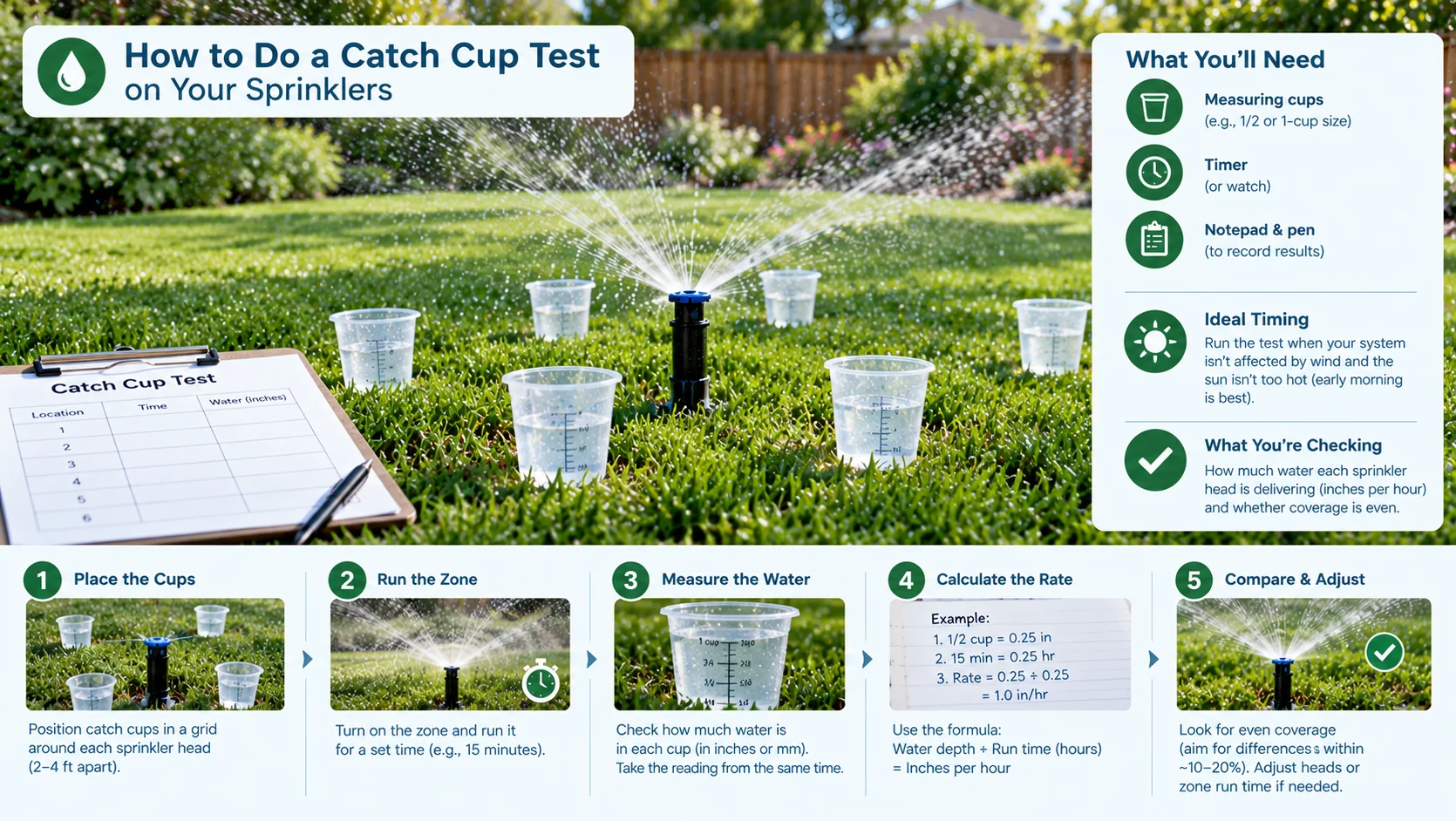
How to Do a Catch Cup Test on Your Sprinklers
A catch cup test takes about 24 cups and 5 to 20 minutes per zone. This guide shows how to turn the cup depths into precipitation rate, uniformity and run time, and how to fix poor results.
Practical answers to watering questions, each showing the method and the numbers, then pointing you to the calculator that does the math.
Written by Daniel Reeves, PE, CID, a licensed Professional Engineer and Certified Irrigation Designer. Every figure is sourced and checked against our methodology.
Newest first, across every topic.
A catch cup test takes about 24 cups and 5 to 20 minutes per zone. This guide shows how to turn the cup depths into precipitation rate, uniformity and run time, and how to fix poor results.
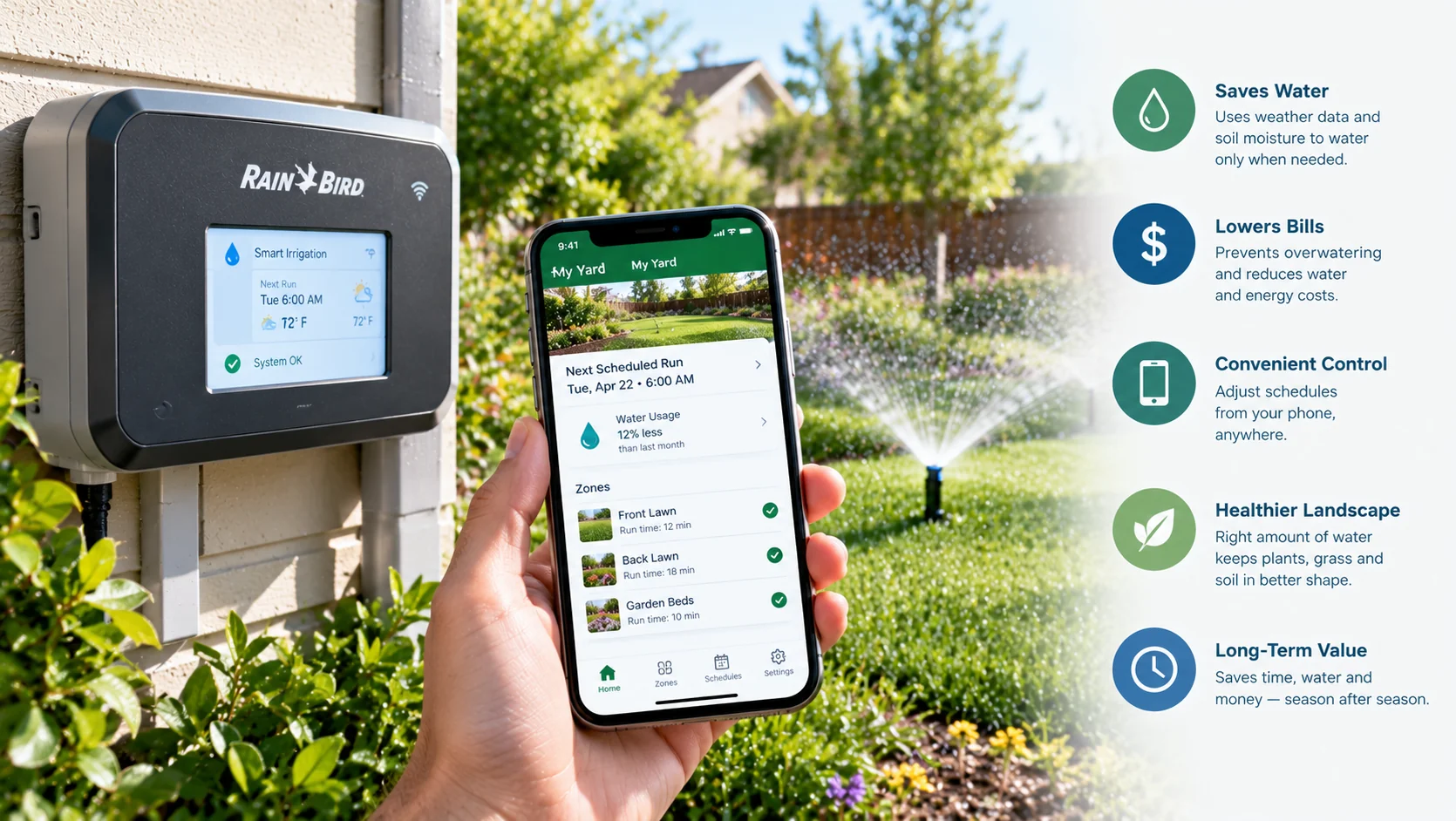
Smart controllers save about 6% to 15% of outdoor water for typical homes and 40% or more for heavy irrigators, but only if you overwater today. This guide gives the payback math and how to check your own ratio.
Zoysia uses about 25% less water than cool-season turf, but too much invites thatch and disease. This guide gives weekly inches, days between waterings by soil, and minutes to set on your controller.
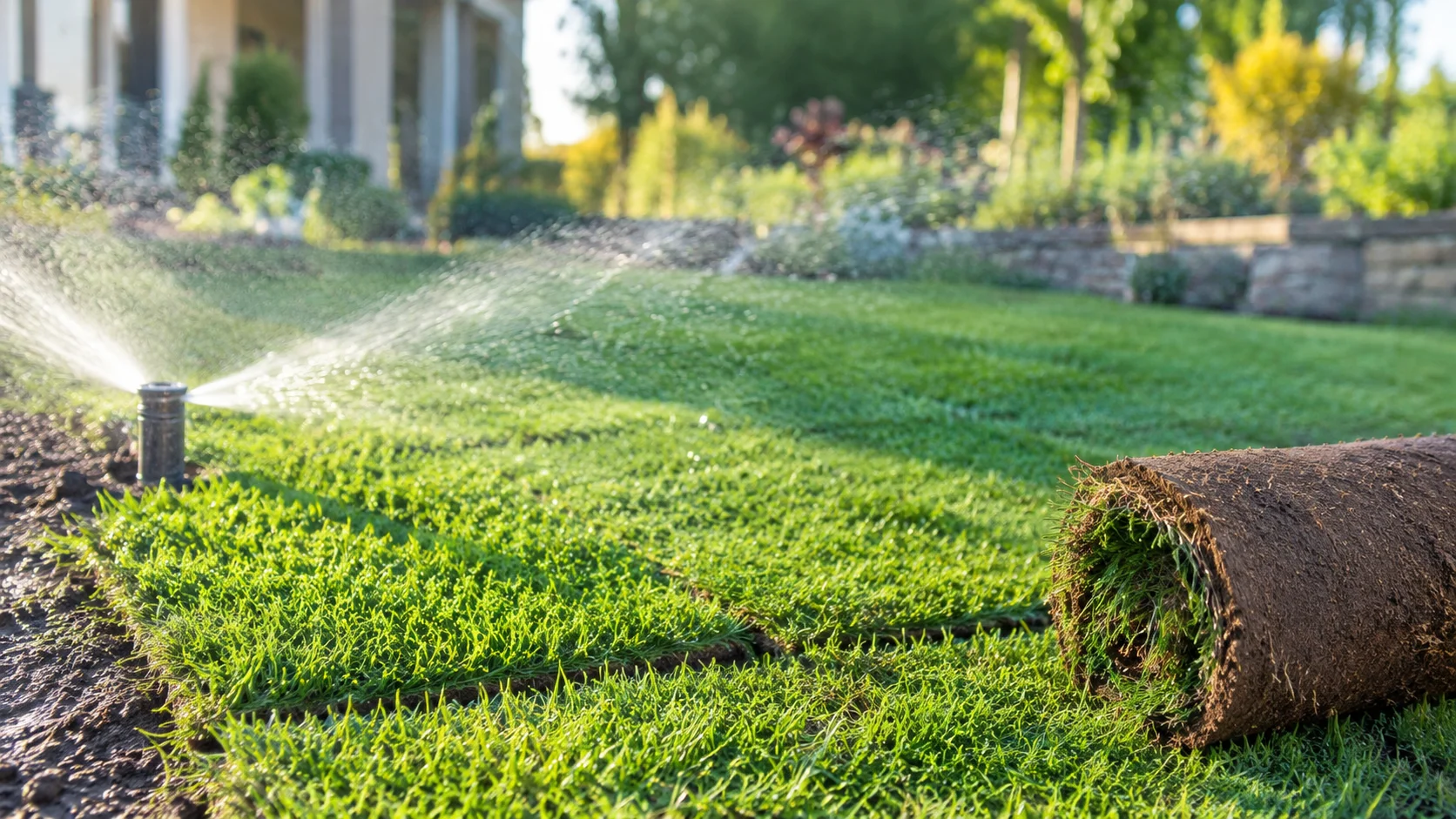
New sod has almost no roots in the soil yet, so it dries out fast and rots if it stays saturated. This guide gives the schedule for each week, the depth per watering and the minutes to set on your timer.
Clay absorbs water slowly and slopes shed it fast, so a standard run time sends much of it down the street. This guide gives the cycle length, soak time and sprinkler fixes that stop runoff.
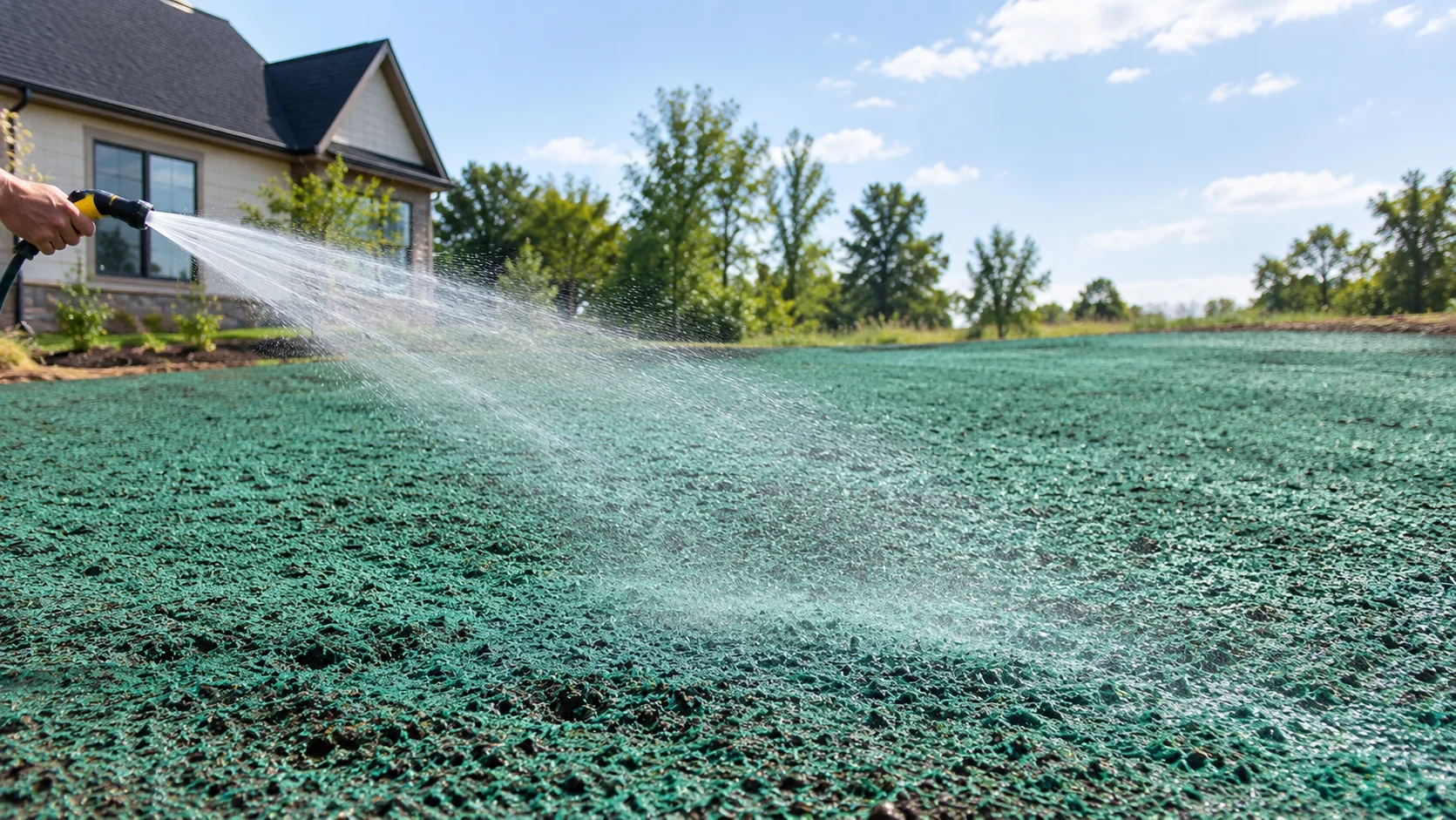
Newly sprayed hydroseed needs light water several times a day, then less often and deeper as the grass grows. This guide gives the schedule for each stage, the gallons per 1,000 square feet and the sprinkler minutes to match.
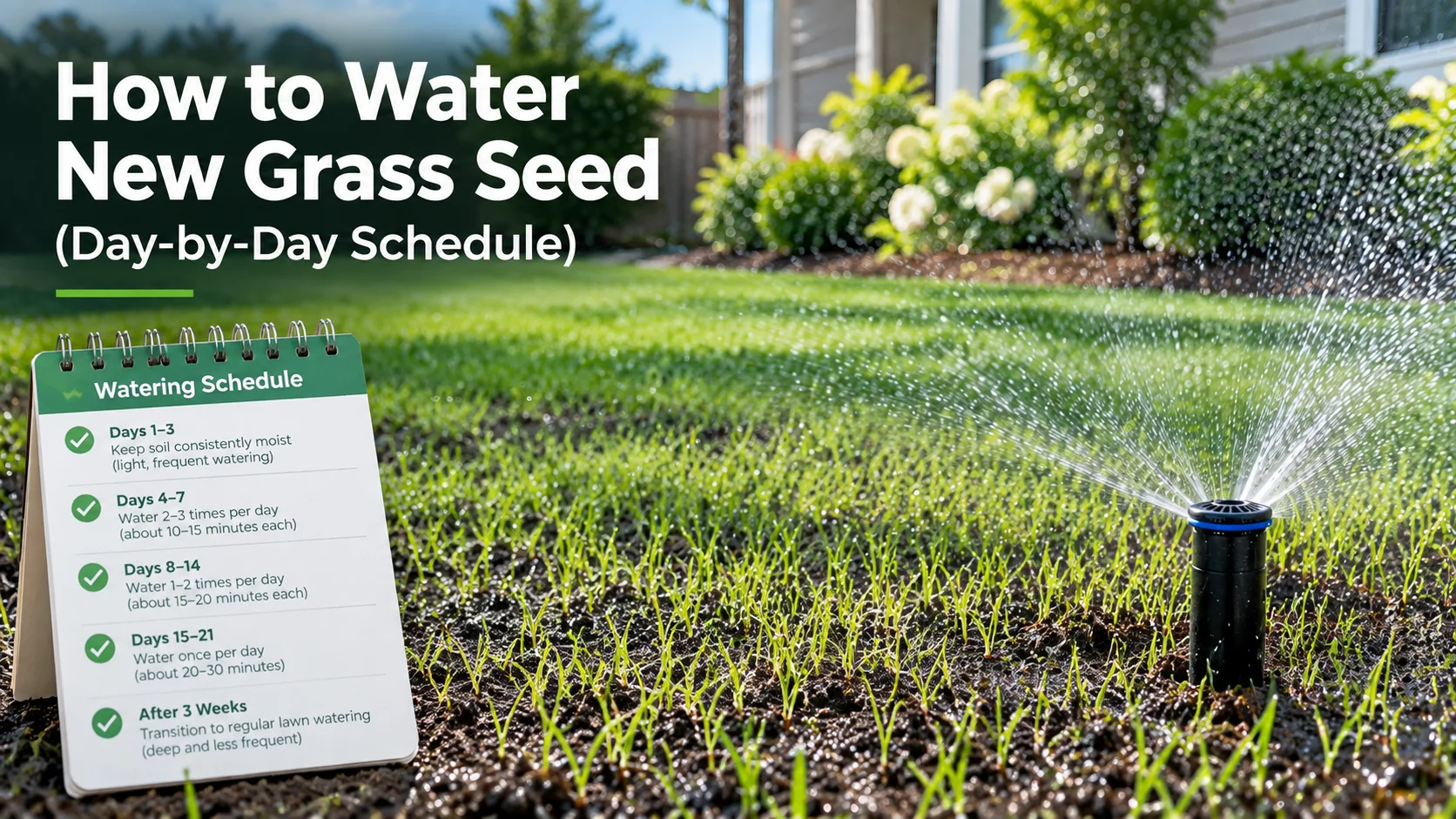
New seed has no roots to reach deeper water, so the top inch must never dry out, yet soaking it washes seed away. This guide gives a day-by-day schedule with run times by sprinkler type.
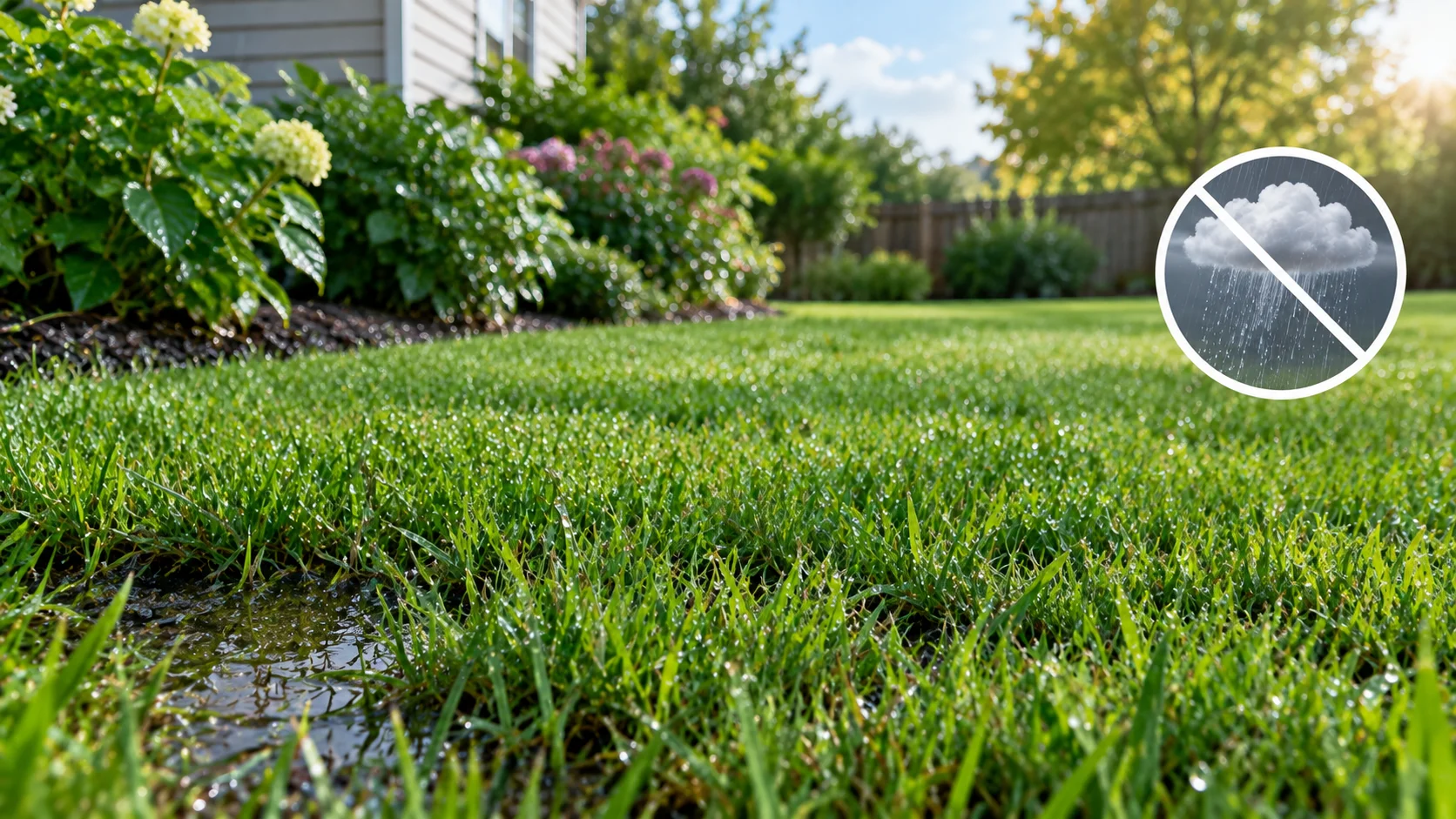
Rain does not always replace a watering. Skip the next one once a steady rain reaches 0.5 inch (13 mm), then use your soil and grass to work out how many days you can wait.
Newly sown seed needs light, frequent watering rather than a deep soak, and the pattern changes at germination and again after the third mowing. Here are the times per day, minutes per pass and signs to adjust by.
A few deep waterings a week suit tall fescue better than daily sprinkling. This guide gives the weekly inches, days between waterings, run times and the rules for new seed and summer dormancy.
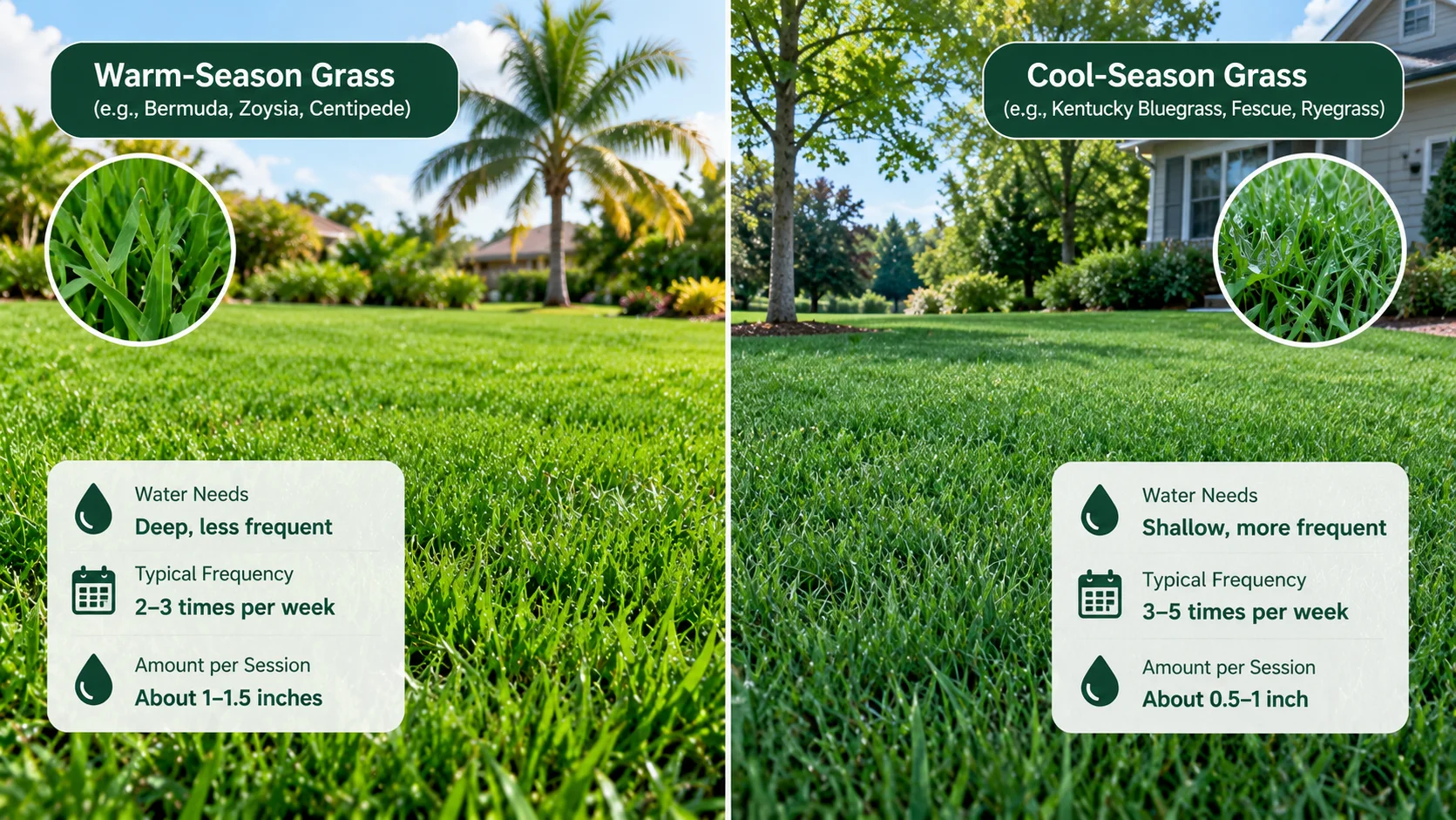
Warm-season grasses use about a quarter less water than cool-season grasses, but the gap changes with climate, month and watering schedule. This article gives the weekly totals, frequencies and run times for each, with a worked example.
Water when the grass shows stress, apply ½ to ¾ inch each time, and let the season set the gap. This guide gives the days, inches and sprinkler minutes for St. Augustine lawns.
Browse every irrigation and watering calculator by category, or tell us about a tool you'd like us to build.